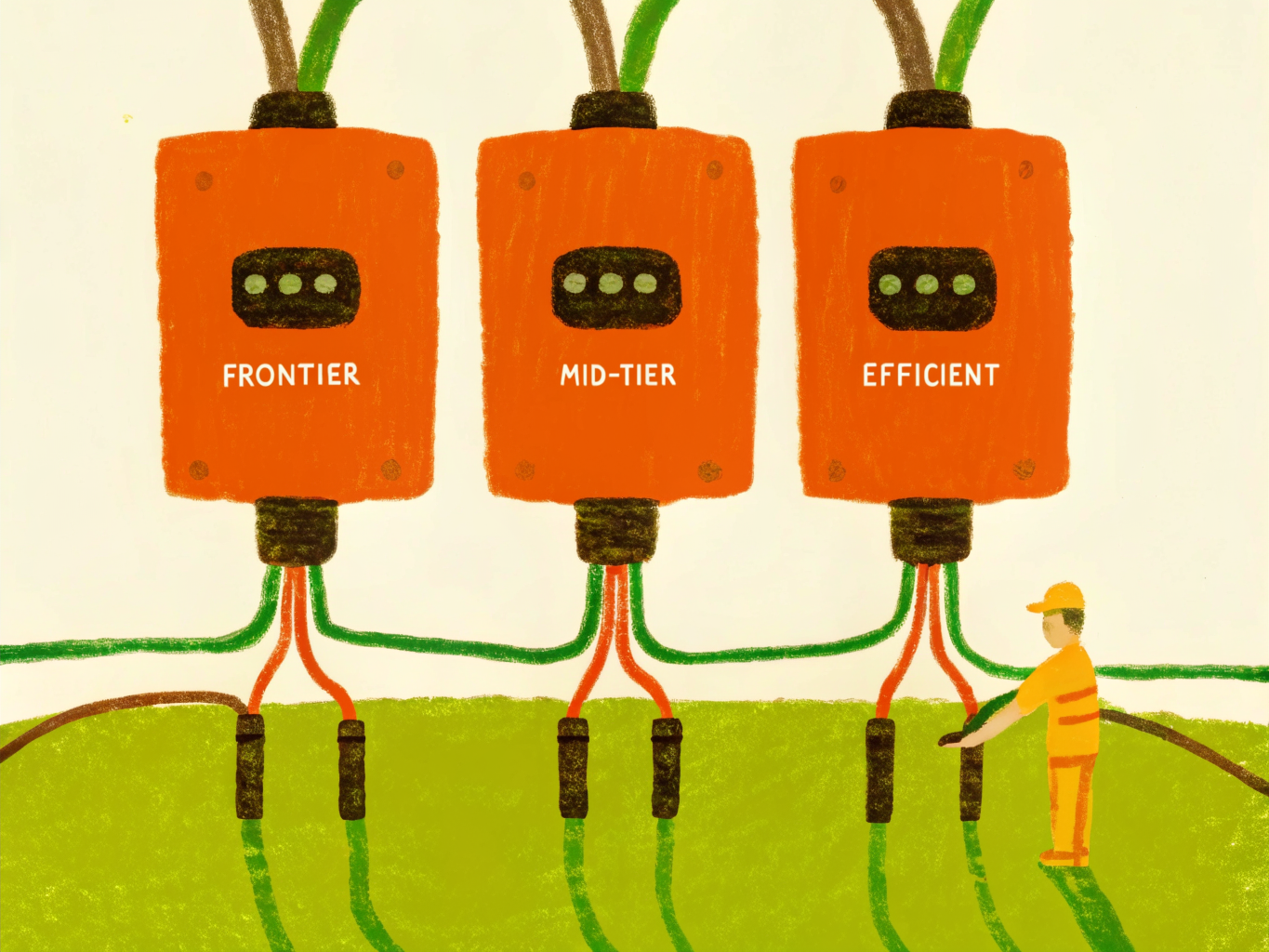
Routing policies fail when they are too abstract.
If the policy only says use cheaper models when possible, teams still need to guess what possible means. In practice, that leads to inconsistent behavior and manual overrides.
Start with decision inputs
A production routing policy should define the signals that matter for a decision:
- task type
- expected reasoning depth
- output risk
- latency tolerance
- provider restrictions
- cost ceiling
Those inputs create a shared language between engineering, AI, and finance.
Keep the tiers understandable
Do not create a policy with twelve nuanced model classes that nobody can reason about.
Start with a small set of buckets:
- Efficient
- Standard
- Frontier
Then document what belongs in each bucket and what causes escalation.
Escalation rules matter more than defaults
Defaults are easy. Escalation logic is where the value shows up.
For example, you may route a drafting task to a standard model by default, but escalate when:
- the prompt exceeds a context threshold
- confidence drops below a tolerance
- the request touches a regulated workflow
- the user requests a higher-assurance answer
That is how a policy becomes operational instead of aspirational.
Measure policy quality
A routing policy should be reviewed like any other system:
- escalation rate
- avoided premium spend
- latency by route
- quality complaints by route
If you only measure spend, you will miss whether the policy is creating hidden quality issues.
Good policy design is not static. It is a living control surface.